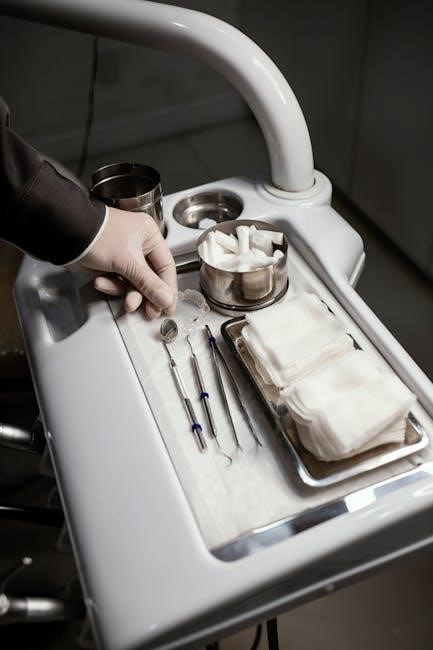
Dental Assistant Study Guide PDF Free: A Comprehensive Overview (Updated 04/07/2026)
Today, April 7th, 2026, accessing a free dental assistant study guide PDF is crucial for exam preparation and professional development. Resources like the Dental Assistant Institute of Florida (DAI-FL) offer valuable materials for certification success.
Dental assistant study guides, particularly in PDF format, are essential tools for individuals pursuing careers in dentistry. These guides serve as comprehensive resources, covering a broad spectrum of knowledge areas vital for both academic success and practical application. They facilitate effective communication amongst dental staff and with patients, underpinning quality care.
A robust study guide emphasizes the importance of thorough patient health records, including comprehensive histories and legally sound informed consent forms. Accurate documentation, charting, and the interpretation of diagnostic materials – like radiographs and study casts – are core components. Understanding charting techniques, including universal numbering systems and restoration symbols, is paramount. These guides prepare aspiring dental assistants for the demands of a safe, thorough, and ethical practice, ensuring they can contribute effectively to patient treatment planning and evaluation.
Why Use a Free PDF Study Guide?
Utilizing a free PDF dental assistant study guide offers significant advantages for students and professionals alike. Accessibility is key; PDFs can be downloaded and reviewed on various devices, anytime, anywhere, eliminating the constraints of physical textbooks. Cost-effectiveness is another major benefit, removing financial barriers to essential study materials.
These guides, like those offered by the Dental Assistant Institute of Florida (DAI-FL), consolidate crucial information regarding patient records, charting techniques, and legal/ethical considerations into a single, easily navigable document. They streamline the learning process, focusing on core competencies needed for certification and practice. A well-structured PDF allows for focused study, efficient review, and ultimately, increased confidence in mastering the necessary skills for a successful dental assisting career.
Essential Resources for Dental Assistant Certification
Preparing for dental assistant certification requires access to reliable resources. The Dental Assistant Institute of Florida (DAI-FL) provides a valuable free study guide PDF, accessible via their website, offering comprehensive coverage of essential topics. Beyond DAI-FL, numerous online platforms host practice exams and supplementary materials.
Effective preparation involves utilizing a combination of resources – official certification handbooks, practice quizzes, and detailed study guides. Remember that patient health records, charting, and understanding legal/ethical guidelines are paramount. Focus on mastering accurate documentation, including charting restorations (crowns, amalgam, bonded fillings) and interpreting radiographs. Consistent review and practice with charting symbols and abbreviations will significantly enhance exam performance and future clinical proficiency.

Core Dental Assistant Knowledge Areas
Essential knowledge encompasses patient records, charting techniques, radiography, and legal/ethical considerations, all vital for providing safe and effective dental assistance.
Patient Health Records & Documentation
Patient health records are fundamental for clear communication among dental staff and with patients themselves, serving as the cornerstone for evaluating the quality of care delivered. A comprehensive practice relies heavily on detailed health histories and properly completed informed consent forms, ensuring both safety and thoroughness.
Complete and accurate examinations, coupled with meticulous documentation through records and charting, are basic requirements for all patient care. All diagnostic findings must be documented, including radiographs and study casts, becoming official parts of the patient’s permanent record.
Each entry requires proper dating and initialing by both the dentist and the dental assistant, maintaining accountability and a clear timeline of treatment. Accurate charting, encompassing existing conditions and planned procedures, is essential for treatment planning and evaluation.
Importance of Accurate Charting
Accurate and detailed charting is paramount within a dental practice, functioning as a vital tool for comprehensive treatment planning, ongoing evaluation, and precise identification of patient needs. It’s not merely a record, but a dynamic document guiding care. Clarity in markings – symbols, drawings, labeling, and overall documentation – is absolutely essential for examination accuracy.
Dental charting encompasses both existing oral conditions and any proposed dental work. Utilizing a consistent, established routine is the best practice to ensure completeness and accuracy. Essential charting elements include noting missing teeth, precise probing depths, areas requiring further investigation, and details regarding furcation involvement and open contacts.
Charting serves as a legal document and a communication tool, demanding precision and attention to detail.
Components of a Comprehensive Patient Record
A truly comprehensive patient record extends far beyond basic demographic information. It’s a multifaceted collection of data designed to facilitate seamless communication between staff members and provide patients with optimal care. Essential components include detailed health histories, meticulously completed informed consent forms, and consistently accurate documentation of all procedures and findings.
This record serves as the foundation for evaluating the quality of care provided. All diagnostic materials – radiographs, study casts, and findings from the diagnostic work-up – are official parts of the permanent record. Every entry must be properly dated and initialed by both the dentist and the assisting personnel, ensuring accountability and transparency.
Complete and accurate records are fundamental to a safe and caring practice.
Informed Consent Forms: Legal & Ethical Considerations
Informed consent forms are a cornerstone of ethical and legal dental practice, demanding meticulous attention to detail. These forms aren’t merely documents; they represent a patient’s autonomous decision-making regarding their treatment. A comprehensive form clearly outlines the proposed procedure, its potential benefits, associated risks, and alternative treatment options – all explained in understandable language.
Dental assistants play a vital role in ensuring patients fully comprehend the information presented. Proper documentation of the consent process, including the date, time, and signatures of both the patient and the dentist, is crucial. Maintaining patient confidentiality throughout this process is paramount, adhering to HIPAA regulations and ethical guidelines.
Accurate and thorough documentation protects both the patient and the practice.

Dental Charting Techniques
Dental charting accurately records patient’s oral health, including existing conditions, restorations, missing teeth, and probing depths, using standardized symbols and abbreviations for clarity.
Universal Numbering System Explained
Understanding the Universal Numbering System is fundamental for accurate dental charting. This system assigns each tooth a unique number, facilitating clear communication and documentation within the dental team. Teeth are numbered from 1 to 32, starting with the upper rightmost molar (tooth #1) and proceeding across to the upper leftmost molar (tooth #16).
The numbering continues on the lower left side with tooth #17 and finishes with the lower rightmost molar (tooth #32). This standardized approach ensures that all dental professionals can easily identify and reference specific teeth within a patient’s record. Accurate tooth numbering is essential for treatment planning, evaluation, and consistent record-keeping. Proper charting utilizes these numbers to document existing conditions and completed restorations effectively.
Charting Existing Dental Conditions
Charting existing dental conditions is a core skill for dental assistants, requiring meticulous attention to detail. This involves documenting any pre-existing issues within the patient’s mouth, such as cavities, fractures, or existing restorations. Areas of suspicion, identified during the clinical examination, must also be clearly marked on the chart.
Furthermore, charting should include the assessment of probing depths, indicating the health of the periodontal tissues, and the identification of furcation involvement in multi-rooted teeth. Noting open contacts between teeth is also crucial. A comprehensive record of these conditions provides a baseline for treatment planning and allows for effective monitoring of any changes over time, ensuring optimal patient care and accurate documentation.
Documenting Restorations: Symbols & Abbreviations
Accurate documentation of restorations relies on a standardized system of symbols and abbreviations for clarity and efficiency. For example, charting a PFM crown on tooth #3 is recorded as “#3 PFM Crown.” Amalgam fillings are similarly noted, such as “#14 MO Amalgam,” indicating mesial and occlusal surfaces. Bonded fillings require specifying the surface – “#10 Ling Bond” for lingual, or “#15 DO Amalgam” for distal-occlusal.
Bridge restorations, like a three-unit bridge, are documented as “#18-20 PFM Bridge.” Gold crowns are charted as “#30 Gold Crown,” and specific amalgam placements, like “#31 MODB Amalgam” or “#28 Cervical Amal,” provide precise details. Consistent use of these conventions ensures a universally understood patient record, vital for treatment planning and continuity of care.
Charting Missing Teeth & Probing Depths
Dental charting meticulously records the patient’s oral condition, including missing teeth, which are clearly marked to indicate extractions or congenital absence. Equally important is documenting probing depths, essential for assessing periodontal health. These measurements reveal the extent of gingival inflammation and potential pocketing around teeth, directly impacting treatment planning.

Beyond these core elements, charting also includes noting areas of suspicion – potential caries or pathological changes – and identifying furcation involvement in multi-rooted teeth. The presence of open contacts, where teeth don’t meet properly, is also crucial to record. Accurate charting, utilizing consistent symbols and a systematic approach, provides a comprehensive overview of the patient’s oral health status.
Identifying Furcation Involvement & Open Contacts
Furcation involvement, a critical finding during periodontal assessments, signifies bone loss extending into the area where a tooth’s roots diverge. Accurate charting of furcation classes (I, II, III) is vital for prognosis and treatment planning. Simultaneously, identifying open contacts – spaces between adjacent teeth – is essential. These spaces can contribute to food impaction, gingival inflammation, and potential shifting of teeth.
Detailed charting of both furcation involvement and open contacts provides a comprehensive picture of the patient’s periodontal and occlusal health. Consistent use of standardized charting symbols ensures clear communication among dental professionals. Recognizing these conditions allows for targeted interventions, preventing further complications and preserving the patient’s oral health. A thorough examination and precise documentation are paramount.

Restoration Charting Specifics
Charting restorations – crowns (gold, SS, PFM), amalgam, and bonded fillings – requires precise symbols and abbreviations for accurate documentation and treatment planning.
Charting Crowns (Gold, SS, PFM)
Accurate charting of crowns – whether gold, stainless steel (SS), or porcelain-fused-to-metal (PFM) – is fundamental to comprehensive patient records. Dental charting meticulously documents existing restorations, aiding in treatment planning and evaluation. Specifically, noting the tooth number with the crown is essential; for example, “#3 PFM Crown” clearly indicates a PFM crown on tooth number three.
Consistent use of standardized charting symbols is paramount for clarity and avoiding misinterpretation. The charting process must be detailed and carefully recorded, ensuring all relevant information is readily available for the dental team; This detailed record supports effective communication and continuity of care. Proper charting facilitates accurate identification and assessment of the patient’s dental status.

Documenting Amalgam Fillings
Amalgam fillings require precise documentation within the patient’s dental chart. Utilizing standardized abbreviations and symbols is crucial for clarity and consistency. For instance, “#14 MO Amalgam” signifies an amalgam filling on tooth number fourteen, covering the mesial and occlusal surfaces. Accurate surface identification – mesial (M), distal (D), lingual (L), occlusal (O), facial (F), incisal edge (I) – is essential for a complete record.
Detailed charting of amalgam restorations aids in treatment planning, monitoring, and future reference. A consistent charting routine ensures no detail is overlooked. Proper documentation supports effective communication among dental professionals and contributes to a thorough understanding of the patient’s dental history. This meticulous approach is vital for optimal patient care.
Charting Bonded Fillings: Surface Identification (Mesial, Distal, etc.)
Bonded fillings necessitate precise surface identification during charting. Standard abbreviations are key: Mesial (M), Distal (D), Lingual (L), Occlusal (O), Facial (F), Incisal Edge (I). For example, “#10 Ling Bond” indicates a bonded filling on tooth number ten, located on the lingual surface. Accurate notation ensures clear communication among dental team members regarding the restoration’s precise location.
Consistent application of these surface identifiers is paramount for a comprehensive and understandable dental record. Detailed charting of bonded fillings aids in treatment planning, monitoring, and future restorative work. A standardized approach minimizes ambiguity and supports optimal patient care. This meticulous documentation is crucial for long-term dental health management.
Using a Consistent Charting Routine
Establishing a consistent charting routine is fundamental to accurate and efficient patient record-keeping. A systematic approach ensures no critical detail is overlooked during examinations. This routine should encompass charting existing conditions – missing teeth, probing depths, furcation involvement, and open contacts – alongside documenting all restorative work, including crowns, amalgam, and bonded fillings.
Following a set sequence, such as starting with one quadrant and proceeding systematically, minimizes errors and promotes thoroughness. Utilizing standardized symbols and abbreviations further streamlines the process. A well-defined routine facilitates treatment planning, evaluation, and accurate identification of dental needs, ultimately contributing to superior patient care and a legally sound record.

Radiography & Diagnostic Materials
Radiographs and study casts are integral parts of the patient’s permanent record, documenting diagnostic findings and aiding comprehensive treatment planning effectively;
Radiographs as Part of the Patient Record
Radiographs are a fundamental component of a complete patient record, serving as visual documentation of dental structures and pathologies. They are essential for diagnosis, treatment planning, and monitoring treatment progress. Accurate documentation of when radiographs were taken, the type of image acquired, and any notable findings is paramount.
These images, alongside study casts and other diagnostic materials, become official parts of the patient’s permanent record, providing a historical overview of their dental health. Proper storage and retrieval of radiographic images are crucial for legal and ethical reasons. Understanding how to interpret and document radiographic findings is a key skill for any dental assistant preparing for certification. The ability to accurately record observations from these images contributes significantly to the quality of patient care and effective communication within the dental team.
Study Casts & Their Role in Treatment Planning
Study casts, also known as dental models, are replicas of a patient’s teeth and surrounding structures, created from impressions. They play a vital role in comprehensive treatment planning, allowing dentists to visualize the patient’s occlusion, identify potential problems, and simulate various treatment options. These physical models are considered official parts of the patient’s permanent record, alongside radiographs and other diagnostic materials.
Dental assistants often assist in pouring and trimming study casts, and understanding their significance is crucial. They aid in evaluating orthodontic needs, planning restorative procedures, and assessing the feasibility of complex treatments. Accurate documentation of any observations made from the study casts, such as crowding or malocclusion, is essential for effective communication and collaborative treatment planning within the dental team.
Documenting Findings from Diagnostic Work-up
Accurate documentation of all findings from the diagnostic work-up is paramount in patient care. This includes meticulously recording observations from radiographs, study casts, and clinical examinations within the patient’s record. Each entry must be dated and initialed by both the dentist and the assisting dental professional, ensuring accountability and a clear audit trail.
Detailed notes should encompass existing dental conditions, areas of suspicion, probing depths, furcation involvement, and the presence of open contacts. Charting restorations – crowns (gold, stainless steel, PFM), amalgam, and bonded fillings – requires precise symbols and abbreviations. Clarity in labeling and documentation is essential for accurate treatment planning, evaluation, and identification of dental needs. A consistent charting routine guarantees completeness.

Legal & Ethical Considerations
Maintaining patient confidentiality, accurate charting, and proper initialing of entries are vital legal and ethical duties for dental assistants, ensuring responsible care.
Maintaining Patient Confidentiality
Patient health records are highly sensitive and require strict adherence to confidentiality protocols. As outlined in essential resources for dental assistant certification, protecting patient information is both a legal obligation and an ethical imperative. This includes safeguarding all documentation – comprehensive health histories, informed consent forms, charting details, radiographs, and study casts – from unauthorized access or disclosure.
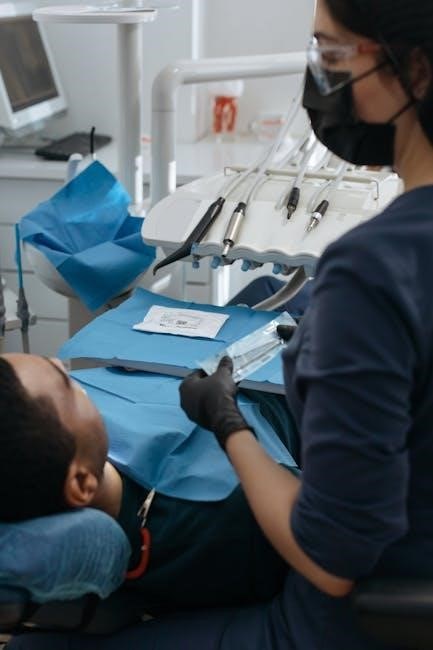
Dental assistants must understand and comply with regulations like HIPAA (Health Insurance Portability and Accountability Act) to ensure patient privacy. Discussions about patient cases should occur in private settings, and access to records should be limited to authorized personnel only. Maintaining this trust is fundamental to a safe and caring practice, fostering a strong patient-provider relationship and upholding professional standards.
Proper Dating & Initialing of Entries
Accurate and complete documentation is paramount in dental assisting, and a critical component is consistently dating and initialing every entry made in a patient’s record. As highlighted in comprehensive study guides, each addition to the chart – whether it’s charting existing conditions, documenting restorations, or recording findings from diagnostic work-up – must be clearly identified with the date and the initials of the individual making the entry, be it the dentist or the assistant.
This practice establishes a clear timeline of care, ensures accountability, and provides a legal record of all treatments and observations. Proper dating and initialing demonstrate professionalism and attention to detail, contributing to the overall quality of patient care and facilitating effective communication among the dental team.
Accuracy & Clarity in Documentation
Maintaining precise and understandable documentation is fundamental to quality dental care, as emphasized in dental assistant study guides. Clarity in markings – utilizing symbols, drawings, and labeling – is essential for accurate examination records. A detailed and carefully recorded charting serves as the foundation for effective treatment planning, ongoing evaluation, and precise identification of patient needs.
Ambiguity can lead to miscommunication and potential errors. Therefore, all entries must be legible, concise, and free of jargon. Consistent use of approved abbreviations and a standardized charting routine, as recommended by resources like DAI-FL, further enhances accuracy and ensures a comprehensive patient record. This meticulous approach safeguards patient well-being and supports legal defensibility.

Resources for Free PDF Study Guides
Dental Assistant Institute of Florida (DAI-FL) provides a readily available, comprehensive EFDA study guide PDF, alongside numerous other online resources for exam preparation.
Dental Assistant Institute of Florida (DAI-FL) Study Guide
The Dental Assistant Institute of Florida (DAI-FL) offers a valuable study guide PDF freely accessible on their website. This resource emphasizes the importance of patient health records as a communication tool between staff and patients, serving as a basis for evaluating care quality.
Comprehensive health histories, informed consent, and accurate documentation are highlighted as essential for a safe practice. The guide stresses complete and accurate charting, utilizing symbols, drawings, and clear labeling for accuracy. It details charting existing conditions, restorations – including crowns (gold, SS, PFM) and fillings (amalgam, bonded) – missing teeth, probing depths, furcation involvement, and open contacts.
The DAI-FL guide also covers documenting diagnostic work-up findings, including radiographs and study casts, all becoming part of the permanent patient record. Proper dating and initialing of entries by both doctor and assistant are crucial, reinforcing legal and ethical considerations.
Additional Online Resources for Dental Assistant Exams
Beyond the DAI-FL study guide, numerous online resources can supplement your preparation for dental assistant exams. While a specific comprehensive list isn’t provided, diligent searching reveals practice quizzes, flashcards, and potentially other free PDF study guides.
Focus on resources that mirror the core knowledge areas emphasized by certification bodies. These include mastering dental charting techniques – understanding the Universal Numbering System, accurately documenting restorations (like PFM crowns, amalgam, and bonded fillings identifying surfaces like mesial, distal, occlusal), and interpreting radiographs.
Remember to verify the credibility and currency of any online material. Prioritize resources that align with current dental practices and ethical guidelines, ensuring you’re studying relevant and accurate information for exam success and a strong foundation in the field.
Tips for Effectively Using a PDF Study Guide
To maximize the benefits of a free dental assistant study guide PDF, adopt a structured approach. Implement a consistent charting routine, practicing with examples of missing teeth, probing depths, and furcation involvement. Focus on accurately documenting restorations – crowns (gold, SS, PFM), amalgam, and bonded fillings – utilizing correct symbols and abbreviations for mesial, distal, and other surfaces.
Regularly review patient health records and informed consent forms, emphasizing the importance of clarity and accuracy. Date and initial all entries, maintaining patient confidentiality. Utilize study casts and radiographs as integral parts of your learning process, documenting all findings meticulously.
Finally, remember that a PDF is a tool; active learning – practice charting, self-testing, and seeking clarification – is key to mastering the material.
Related Posts


bible family tree adam to jesus pdf
The Bible presents a detailed lineage from Adam to Jesus,…
james hardie installation guide pdf
James Hardie Installation Overview Proper installation is crucial for James…